How to Choose Snowboard Bindings
Whether you're stepping onto a snowboard for the first time or upgrading your setup, understanding your bindings is key to having a better time on the mountain. Snowboard bindings connect your boots to your board and play a big role in comfort, control, and overall performance.
What Are Snowboard Bindings?
At a glance, bindings may look simple, but they’re a critical part of your snowboarding setup. Their main job is to secure your boots to your board while allowing you to control movement, including turns, jumps, carves, and more. They also help absorb shock and keep your feet comfortable throughout the day.
Bindings have a few main components:
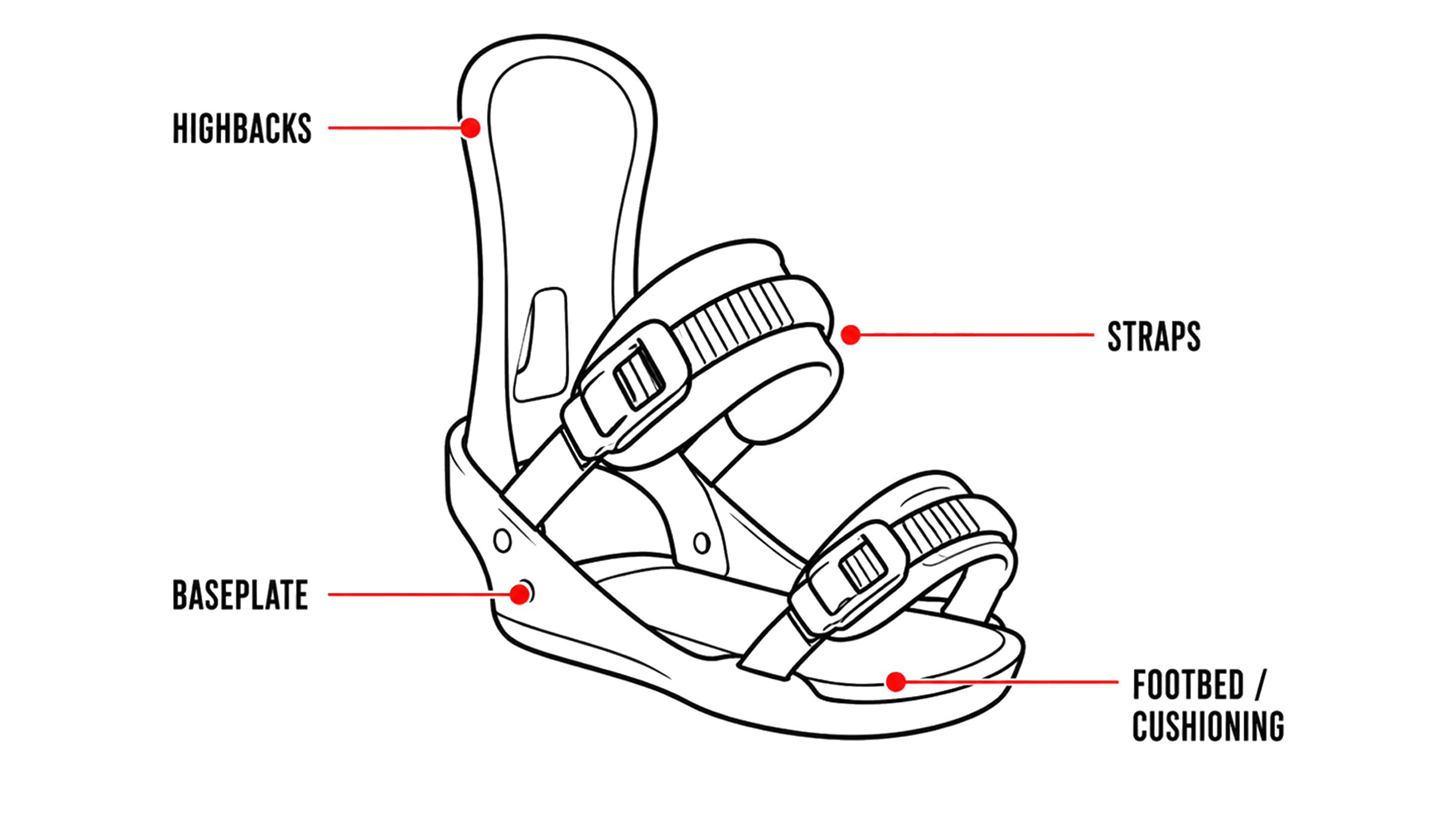
Highbacks: The vertical plate behind your calves. Highbacks provide support for heelside turns and can vary in stiffness depending on your riding style.
Baseplate: The foundation of the binding that attaches directly to the board. Some baseplates include built-in cushioning for better shock absorption.
Straps: These wrap over your boots and lock you into place. Most bindings have an ankle strap and a toe strap, which may go over the top of the boot or across the toe box.
Footbed / Cushioning: The platform where your boot sits. Footbeds can include added padding to absorb vibrations and impacts.
Match Bindings to Your Riding Style
Not all bindings are built the same. The best choice depends on how and where you like to ride.
All Mountain: Great for riders who want to do a little bit of everything, from groomers and powder to the occasional lap through the park. Look for medium flex bindings that balance support and flexibility.
Freestyle / Park: Softer and more forgiving, these bindings offer greater flexibility to help with tricks, jumps, and rail riding. They’re ideal for riders who spend most of their time in terrain parks.
Freeride: Built for steep terrain, trees, and powder lines. These bindings tend to be stiffer for maximum response and control when things get fast and technical.
Flex Rating: What It Means and Why It Matters
Binding flex refers to how much give the binding has, especially in the highback and baseplate. It impacts your ride feel, control, and comfort.
| Flex Level | Rating | Best For |
|---|---|---|
| Soft | 1–3 | Beginners, casual riders, and park-goers who want more mobility. |
| Medium | 4–6 | All-mountain riding with enough support for speed and enough flexibility for freestyle. |
| Stiff | 7–10 | Advanced riders, aggressive carvers, and big mountain terrain. |
Tip: Match your bindings’ flex with your boot flex and riding style for the best experience.
Types of Snowboard Bindings
There are several kinds of snowboard bindings, each with unique entry systems and design priorities:
Strap-In Bindings: The most common style. You step in and tighten two straps, usually ankle and toe, to secure your boot. They’re reliable, widely available, and customizable.
Rear-Entry / Convenience Bindings: These have a highback that folds down, so you can slide your boot in quickly from the back for faster entry and exit.
Clicker™ X HB Bindings: A step-in style system that lets compatible boots connect directly into the binding for a faster, strap-free entry.
Splitboard Bindings: Designed for backcountry touring, these can switch between climbing and riding modes. They are only compatible with splitboards.
Each type is different, so your choice should depend on what you value most: convenience, precision, versatility, or backcountry performance.
Getting the Right Fit
It’s important to match the binding size to your boot size, not just your height or weight.
Use the table below to find your binding size. If you’re between sizes, size up for a better fit. Don’t know your US boot size? Measure your foot length in centimeters and cross-reference with a snowboard boot sizing guide.
| Binding Size | Men’s Boot Size (US) | Women’s Boot Size (US) | EU |
|---|---|---|---|
| XS | 3–5 | 4–6 | 35–37.5 |
| S | 5–7 | 6–8 | 37.5–40 |
| M | 7–9 | 8–10 | 40–43 |
| L | 9–11 | 10–12 | 43–46 |
| XL | 11–13 | 12+ | 46+ |
Ensure compatibility: Your boot should fit snugly into the binding without gaps, overhang, or pressure points.
Adjust straps and highbacks: Fine-tune these for comfort and support. Make sure the ankle strap sits over the ankle joint, not too high or too low.
Avoid over-tightening: Your foot should feel secure, but not so tight that circulation is cut off.
Snowboard bindings may not be the flashiest part of your setup, but they’re essential for translating your movements into performance while keeping you comfortable and secure on the mountain.
The right pair of bindings should fit your boots well, match your riding style, and feel responsive underfoot. Start with all K2 snowboard bindings, or narrow it down by all mountain bindings, freestyle bindings, freeride bindings, Clicker™ X HB bindings, convenience bindings, or split snowboard bindings.
Related guides
How to Choose a Snowboard | Snowboard Size Guide | How to Choose Snowboard Boots