How to Choose a Snowboard
Snowboarding is an exciting way to explore the mountain, and choosing the right board can make all the difference. Whether you're just starting out or looking to upgrade, this guide will help you find the right snowboard for your style, skill level, and terrain.
Types of Snowboards
Snowboards come in different shapes and designs to match different riding styles. Here are the main types:
All Mountain Snowboards: Versatile boards built for a mix of terrain, including groomers, powder, and park laps. Great for beginners and riders who want one board that can do a little of everything.
Freestyle Snowboards: Lightweight, playful boards made for tricks, jumps, side hits, and park features. Ideal for riders who like creativity and a more forgiving feel.
Freeride Snowboards: Designed for off-piste lines, deeper snow, steeper terrain, and higher-speed riding. These boards often have a more directional shape and stiffer flex for added control.
Powder Snowboards: Wider boards with shapes made to help you float in deep snow. Best for riders chasing storm days and soft conditions.
Splitboards: Backcountry boards that split into two skis for uphill travel, then reconnect for the ride down. Splitboards require additional gear like climbing skins and touring-specific bindings.
Camber vs. Rocker: Understanding Board Profiles
The profile of a snowboard affects how it feels underfoot, how easily it turns, and how much edge hold or float it provides.
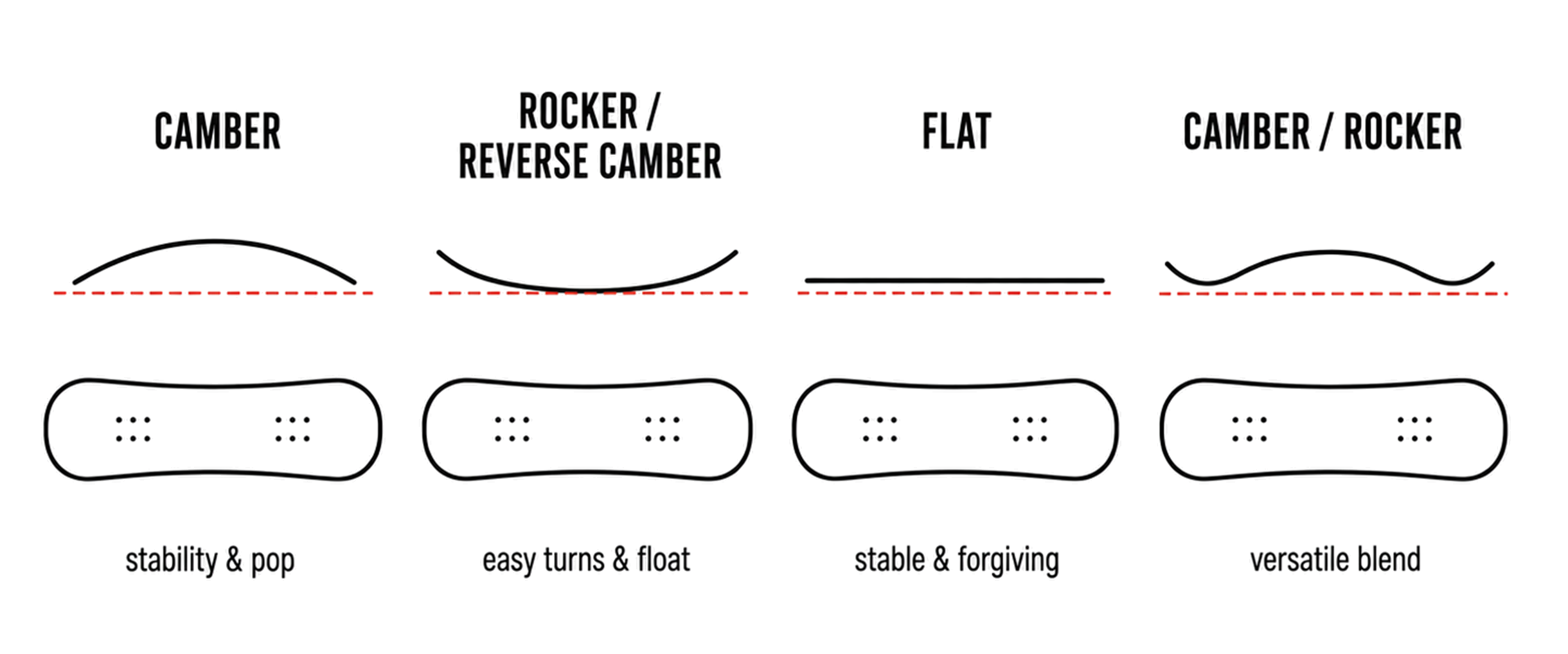
Camber: A traditional profile with an upward curve through the middle of the board. It provides stability, pop, and strong edge hold for carving and higher-speed riding.
Rocker / Reverse Camber: A profile where the center of the board is lifted. It feels surfy, turns easily, and helps with float in soft snow.
Flat: A stable, forgiving profile with no major curve. It works well for beginners and riders who want a predictable feel.
Camber/Rocker: A blend of both profiles, usually offering camber underfoot with rocker near the tip and tail for added versatility.
Snowboard Shapes: Pick Your Style
Different snowboard shapes are built for different riding styles. Here’s what to look for:
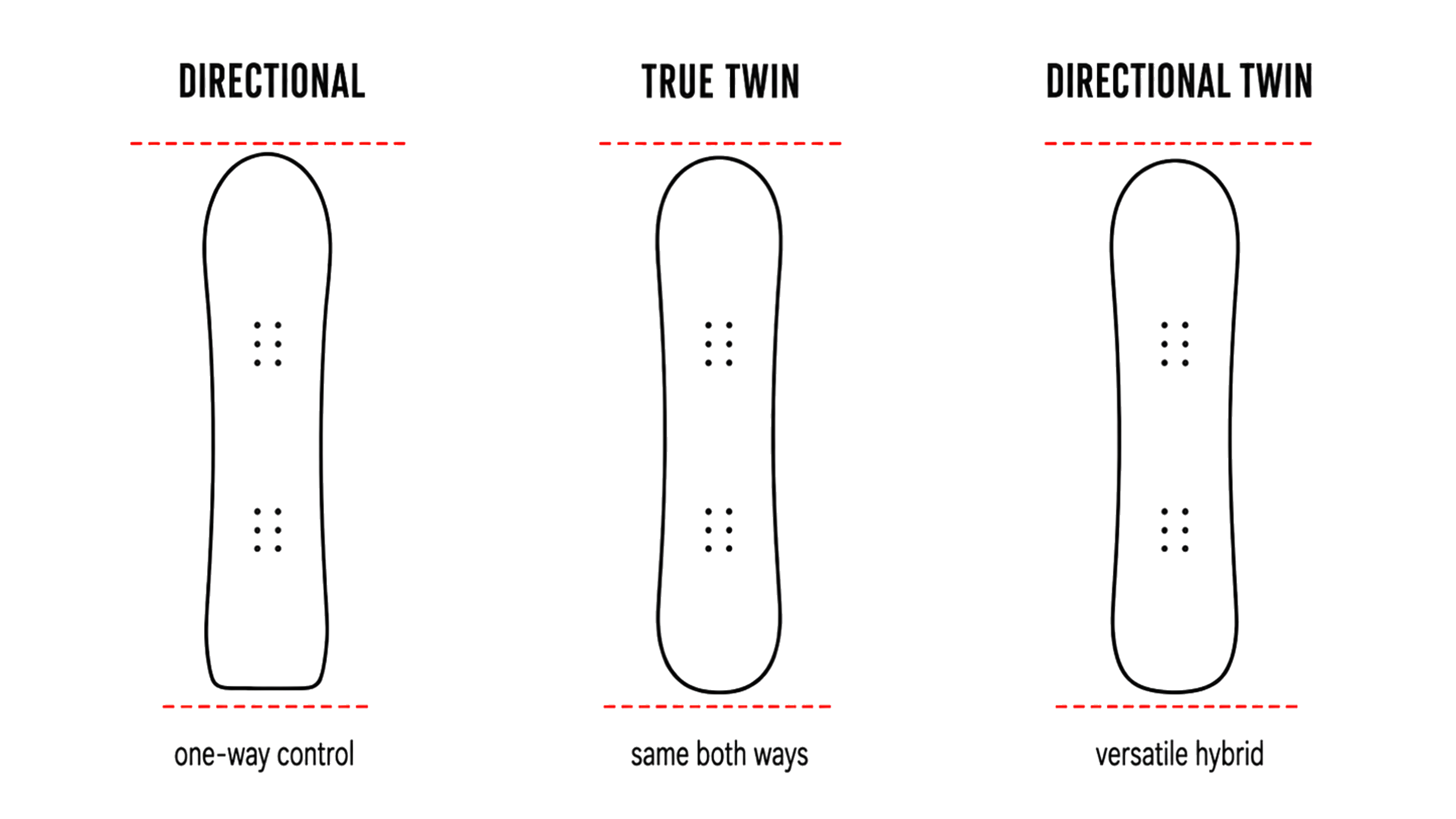
Directional Boards: Built to ride best in one direction. Great for speed, carving, powder, and freeride terrain.
True Twin Boards: Symmetrical from tip to tail. They ride the same forward or switch, making them ideal for freestyle and park riders.
Directional Twin Boards: A versatile hybrid shape that blends freestyle feel with all-mountain performance.
Sidecut Radius
The sidecut radius is the curve along the edge of your snowboard. It helps determine how tight or wide your turns feel.
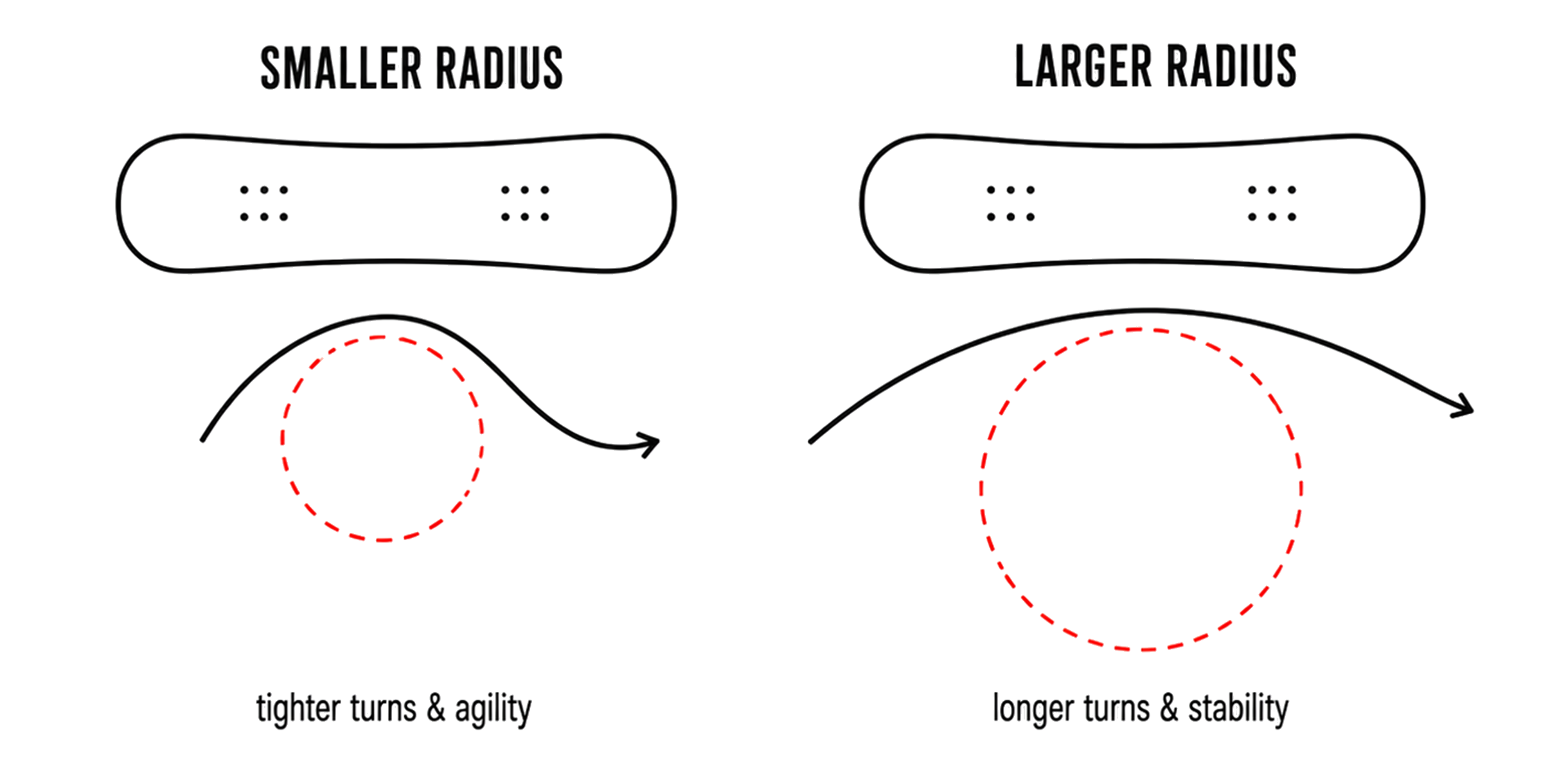
Smaller radius: Tighter turns and quicker edge changes.
Larger radius: Longer, smoother turns with more stability at speed.
In general, narrower boards tend to have shorter sidecut radii, while wider boards tend to have longer ones.
Effective Edge
The effective edge is the part of the board’s metal edge that makes contact with the snow while you ride. It is shorter than the total length of the snowboard.
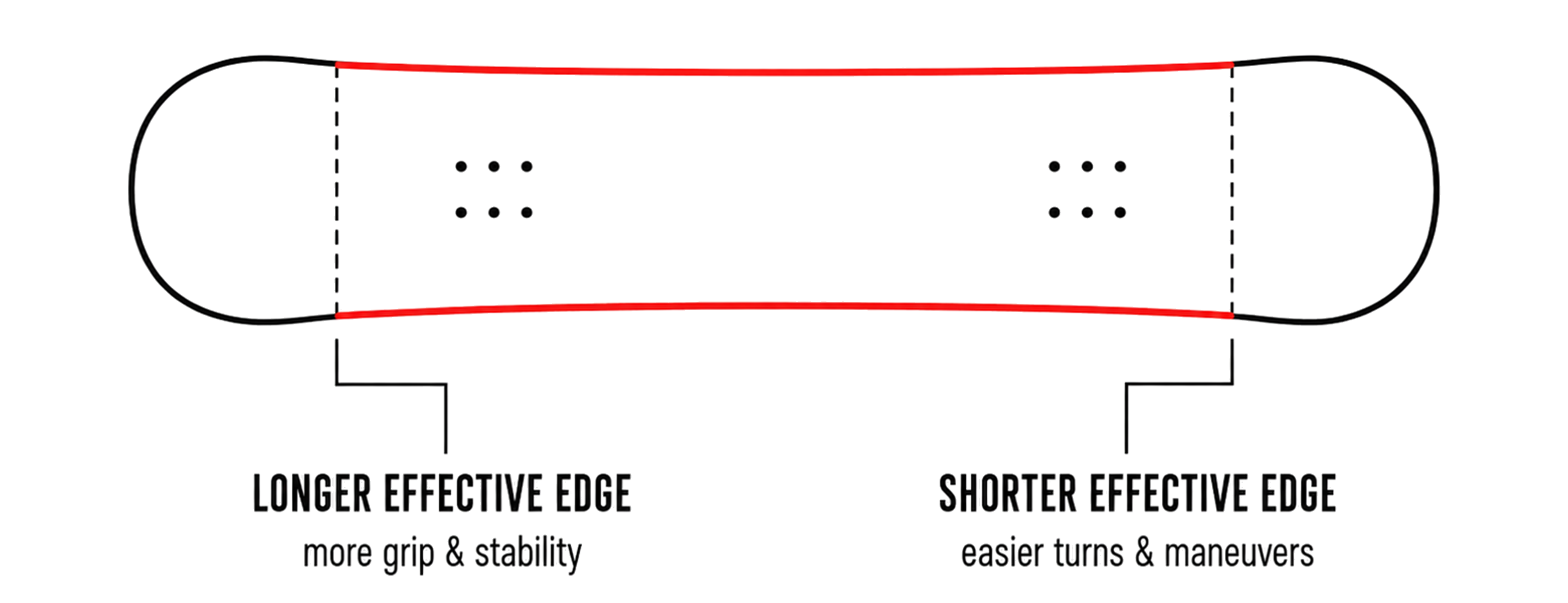
Longer effective edge: More grip and stability, especially at speed or on firm snow.
Shorter effective edge: Easier turning, spinning, and maneuverability.
Flex: Soft vs. Stiff
Snowboard flex affects how forgiving, responsive, and stable a board feels.
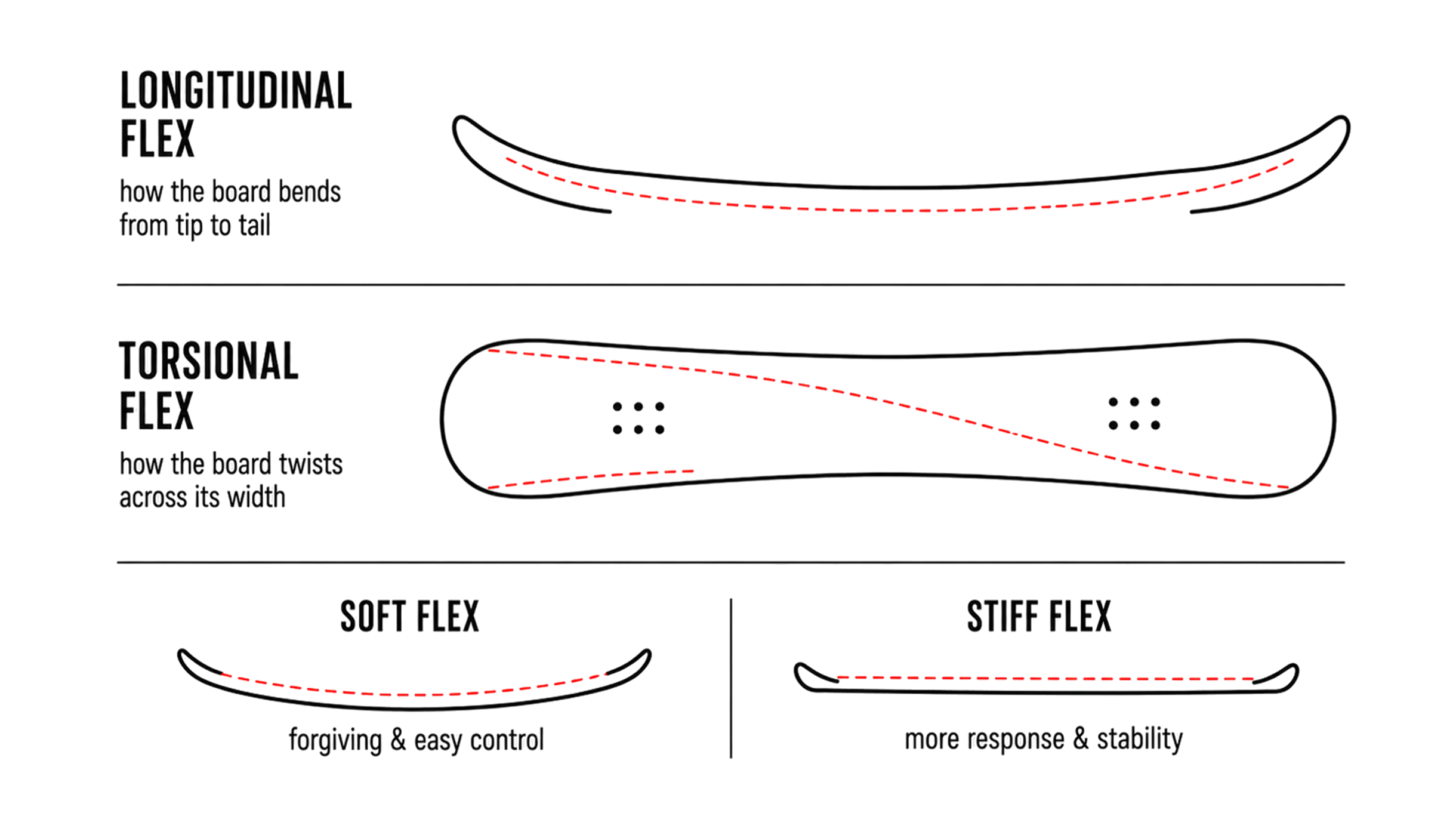
Longitudinal flex: How the board flexes from nose to tail.
Torsional flex: How the board twists from edge to edge.
Soft flex: More forgiving and easier to control, making it great for beginners, freestyle riders, and slower speeds.
Stiff flex: More powerful and stable, with stronger edge hold for aggressive turns, speed, and big mountain terrain.
Sizing: Snowboard Width and Length
Snowboard Width: Your boots should hang slightly over the edges of the board, usually about 1 to 2 centimeters on each side. This gives you leverage while still helping avoid toe and heel drag.
Snowboard Length: Your snowboard length depends on your height, weight, ability level, and riding style. A general rule is that when the board is stood on its tail, the nose should reach somewhere between your chin and nose. For more precise sizing, use your weight and the board’s recommended size chart.
Check out our snowboard size guide for more details.
Ready to find the board that suits your style? Whether you're learning, cruising, chasing powder, or sending it in the park, understanding these snowboard features will help you ride with more confidence and control.
Start with all K2 snowboards, or narrow it down by all mountain snowboards, freestyle snowboards, freeride snowboards, powder snowboards, or splitboards.
Related guides
How to Choose Snowboard Boots | Snowboard Size Guide | How to Choose Snowboard Bindings